
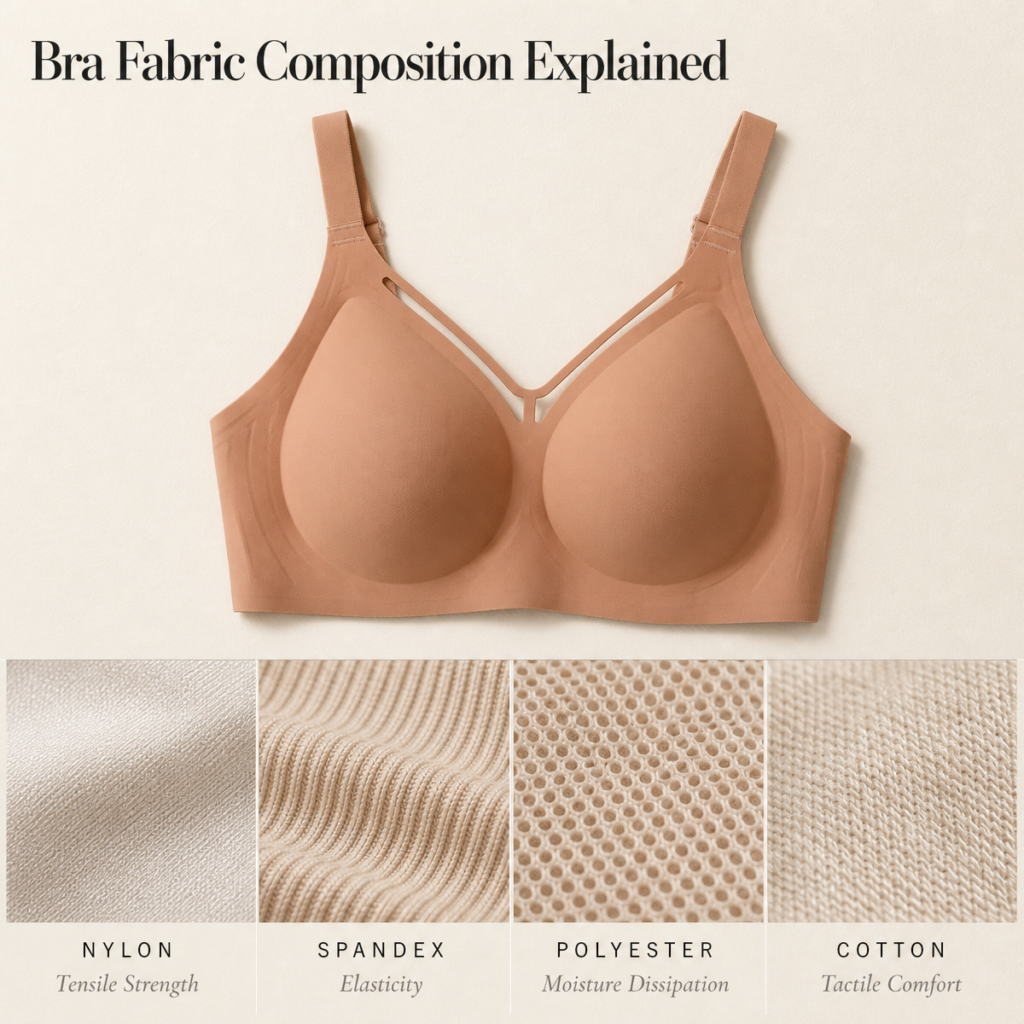
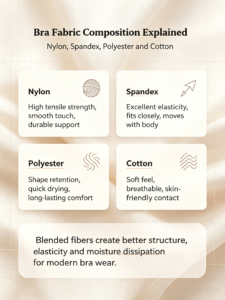
The type of fabric used in manufacturing bras and lingerie determines the user’s experience. It is known that certain physical properties of the raw fiber are of critical importance in the manufacture of bras. The physical properties range from tensile strength, elasticity, and moisture dissipation to the bra’s tactile comfort.
Since no single fiber can meet all the functional needs of a modern bra wearer, manufacturers use fiber blends to provide structure and durability. For instance, blending polyester and cotton introduces new features in fabric. This enhances the comfort the clothing offers to the skin.
1. Understanding Bra Fabric Composition
Bra fabric composition refers to the material used to make the fabric. It describes the percentage of fiber in fabric and determines its quality. Blending different fibers gives the fabric its characteristics and determines its performance.
Some desired characteristics of fabric include comfort and stretch. Others are durability and moisture management. So knowing what constitutes a fabric can help a consumer make the right choices when buying a bra.
1.1 What Does Fabric Composition Mean?
The percentage of fibers used in a fabric determines its composition. Typically, the percentages are found on a care label or product label. For instance, if nylon is 80% and spandex is 20%, nylon is the main component of the bra.
Spandex provides elasticity. Other mixes include cotton and polyester or polyester/spandex. A composition label is useful to consumers because it tells them the bra’s performance, wear, and feel. So fiber analysis can help a consumer find products that are comfortable and supportive. Also, it can help choose products that are breathable and durable.
1.2 Why Manufacturers Blend Fibers
Bra producers combine different fibers since no single fiber has all the desirable properties. Nylon provides durability and smoothness, spandex adds stretch, polyester adds shape retention, while cotton adds breathability. When combined, these materials enable designers to develop bras that function effectively in various respects.
Fabrics may be blended to reduce stretch and add to fit. This also adds comfort and improves the garment’s support and lifespan. Bras that combine spandex and nylon fibers offer the right mix of comfort and durability. Lastly, blending reduces production costs without compromising the bra’s quality.
1.3 How Fabric Composition Affects Bra Performance
The fiber the fabric is made of affects its performance. The proper fiber mix determines comfort and support. It also determines the fiber’s durability. The right bra fit can make the wearer have a pleasant experience, while the composition helps the bra stay in shape and fit correctly throughout its service life.
1.4 Comfort and Skin Feel
Comfort and skin feel are important considerations when buying a bra. In particular, cotton is preferred since it is soft on the skin. Nylon comes second because it is smooth and less weighty. So, blended fabric minimizes friction and enhances overall comfort. The fabric affects flexibility and movement.
Also, some fibers help the bra fit the body naturally, while others minimize irritation and pressure points. So the right blend enhances comfort and allows the bra to be worn for longer periods. Choosing a blend that matches climatic conditions and skin sensitivity can make a huge difference in the wear.
1.5 Support and Shape Retention
Fabric composition is a big factor in supporting the body. Nylon and polyester support the breast, while spandex allows the bra to stretch freely. So choosing the right blend among cotton, spandex, etc is vital when buying a bra. All of these fibers form a supportive fit even when the wearer is in motion.
Shape retention is another crucial characteristic of a bra. The feature allows the bra to retain its original shape after numerous wears and washes. Fabrics with high recovery properties do not stretch or sag. So a perfect blend ensures that cups, bands, and straps continue to provide support and comfort.
1.6 Moisture Management
This involves controlling the moisture and humidity levels within a fabric. Cotton is the best moisture absorber among all other fabrics. Cotton bras keep the skin dry and comfortable.
A poor moisture management fabric gets wet and is uncomfortable to wear. While a well-made yarn will keep you fresh throughout the day. So, using a combination of absorbent and fast-absorbing fibers will give better results. When paired with other appropriate bra construction materials, the bra can be made to accommodate the wearer’s different environmental conditions and activity levels.
1.7 Longevity and Maintenance
The type of fabric used determines how long the bra will serve you. In addition, it determines suitability for regular wear and laundering. Nylon and polyester do not wear easily. Their unique longevity properties make them more durable. However, cotton needs special care since it shrinks and loses shape easily.
While nylon and spandex guarantee flexibility, this blend poses challenges with elasticity. So wearing a bra with a blended fabric adds value. But you must follow garment washing and storage guidelines to help prolong the garment’s useful life. It also ensures consistent performance throughout its usage.
2. Nylon in Bra Manufacturing.
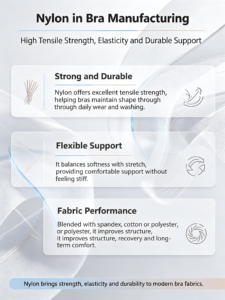
Nylon is the preferred primary fiber in bra manufacturing because it uniquely combines high tensile strength and an ultra-soft tactile feel. In addition, it has dynamic recovery properties that alternative fibers cannot replicate simultaneously.
The best undergarments are made from fabric that can withstand friction and tension without losing its structural elasticity. Luckily, nylon is smooth and lightweight. It combines well with spandex to produce a comfortable and supportive fabric. It also absorbs body heat without causing skin irritation
2.1 What Is Nylon?
Nylon is a strong but versatile textile. It was an instant hit in the fashion industry for its lightweight and durability. Nylon was also used in lingerie production because it had a smooth look and feel on the skin. The fiber can be braided into many different fabric structures, adaptable to various styles and braids. Nylon’s wear resistance and durability under repeated use have made it a key material in modern intimate apparel.
2.2 Key Features of Nylon
Nylon has several features that make it popular for making bras. It is strong, comfortable, and functional, and can be used for both everyday and high-quality lingerie products.
2.3 Lightweight Construction
Nylon is very lightweight, making bras feel comfortable without excess bulk. This makes it easy to wear all day and creates a “barely there” feel. Lightweight materials also make transport easy and reduce shoulder and body stress.
2.4 Smooth and Silky Texture
Nylon is smooth and feels silky. This is one of the most useful properties of nylon. It is comfortable and feels smooth against the skin. So it is suitable for undergarments. Its texture creates a comfortable feel and adds aesthetic value to the lingerie.
2.5 High Tensile Strength
Nylon is very strong and highly stretchable. Besides, it cannot be easily pulled apart. The strength provides the structural integrity of a bra and helps it maintain that integrity over time. The feature allows it to be repeatedly stretched when worn.
2.6 Abrasion Resistance
Nylon is excellent for high-friction areas. It is resistant to wear and does not pill easily. These features make it an ideal material for bra parts, especially the underbands, wings, and strap attachments. These parts are susceptible to wear.
2.7 Quick-Drying Properties
Nylon is a waterproof and weatherproof material. Besides, it has filaments that promote capillary action. So it retains water on its surface and speeds up moisture evaporation. This keeps the garment dry and stops the bacteria from thriving.
3. Conclusion
Nylon, spandex, polyester, and cotton are all great materials, each with its own function when making a bra. Nylon contributes to strength, and spandex provides stretch. Polyester is durable, and cotton is soft and breathable.
By understanding these characteristics, they can choose bras that fit their needs, provide proper support, and enhance their comfort and style. The majority of brand manufacturers use more than one fiber for an ideal mix of use and performance. However, shoppers need to be aware of blends and fabric labels to avoid misinformation. It results in an educated purchase and better allows the purchaser to select a fabric that suits them.