

1. How Bra Factory Cup Shape, Wire Placement, and Gore Width Work
https://www.instagram.com/reel/DWJEeUcCV85/?utm_source=ig_web_copy_link&igsh=MzRlODBiNWFlZA==

Most people think they can solve fit problems by changing the size. But the answers lie in cup shape, wire placement, and gore width. The elements determine how a bra sits on the body. Understanding them turns guesswork into a repeatable fitting process.
1.1 Volume Distribution
Cup shape isn’t really about size. It’s about how volume is distributed within the cup. A balconette cup spreads tissue horizontally and sits low across the top, while a full-coverage cup distributes volume more evenly, front to top.
Plunge styles curve the wires so that the centre point is lower, while the spacer cup projects the volume outward. However, the same cup size does not guarantee a good fit for different people.
1.2 Natural Breast Shape
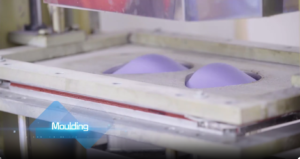
The cup shape will only fit with a natural breast shape. Round breasts will go well with structured, evenly-filled cups, but teardrop breasts will need more room at the bottom of the cup. If the breast tissue is more to the side or east-west, other cups will be needed, or fuller side coverage will be needed to prevent spillage.
If the shape and cup do not seem to match, you will notice these signs: loose clothing will show wrinkles, tissue will fall over the top or side of the cup, or the cup will be too deep or tight – the “quad-boob” problem.
1.3 Decorative Aspect
The underwire is more of a construction component than a decorative element. The wire’s job is to frame and separate breast tissue along the body’s contours. The wire separates the rib cage and breast tissue. It also separates the two breasts and provides support.
If the wire is properly fitted, the discomfort disappears. When it does not, the other part of the bra feels out of place.
1.4 Wire Width vs Wire Height
Wire fit has two independent dimensions, and confusing them is a common mistake. Wire width refers to how wide the underwire arcs match the width of the breast root — narrow for closer-set tissue, wider for broader-set tissue.
Wire height refers to how deep the wire sits vertically, accommodating more or less projection and fullness. A wire can be the correct width but the wrong height (or vice versa), which is why swapping only band or cup size doesn’t always resolve wire discomfort.
1.5 Diagnosing Wire Problems
Where a wire misbehaves, it tells you that something is wrong. A wire that rides up in front usually signals a cup that’s too small for the tissue it’s holding. A wire that pokes or digs into the underarm often means the band is too big or the wire itself is too wide for the root.
A wire that won’t lie flat against the ribcage, gapping or bowing outward, usually points to a mismatch between the wire’s curvature and the shape of the ribcage itself — not a size issue at all.
1.6 Narrow vs Wide Gore Trade-Offs
The gore, as the centre panel connecting the two cups, has an outsized effect on fit. A narrow gore suits closer-set, plunge-style designs and allows less separation between cups. It is ideal for narrower breast roots.
A wider gore or wide-set design offers more structural separation and support for larger cup volumes. Choosing the wrong width in either direction creates visible problems. Firstly, if it is too narrow, the gore won’t lie flat. If it is too wide, it may gap awkwardly at the centre.
1.7 Gore Height and Comfort
Beyond width, gore height changes how a bra feels and looks under clothing. A low-set gore sits more discreetly and suits lower necklines, but may offer less central stability for fuller busts. A taller gore adds more structural separation and support, but can be more visible under fitted tops. The right gore height often comes down to balancing support needs against the clothing a person plans to wear it under.
2. Conclusion
Cup shape, wire placement, and gore width don’t work in isolation — they work together as a system. A true fit comes from matching all three to the body’s actual shape, not from chasing a single size number up or down.
3. Buy Bra Products for Telige
If you’ve been stuck in a cycle of “almost right” bras, it’s worth stepping back from size alone and asking which of these three elements is actually causing the problem. Telige is built around exactly this idea: fit as a system of shape, structure, and support, not just a number on a tag.
Explore Telige’s fitting guide to identify your cup shape, wire needs, and gore preference in minutes, and shop styles engineered around real anatomy rather than one-size assumptions. Better fit starts with understanding what’s actually going wrong — and Telige is here to help you find it.