
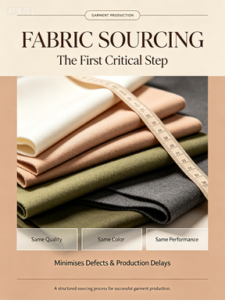
One of the most essential components of successful garment production, particularly for those who have a lot of orders to process and fulfill, is fabric sourcing. The selection of appropriate materials is the first critical step. It ensures the same quality, color, and performance. A structured sourcing process minimises defects and production delays.
1.What is Fabric Sourcing
Fabric sourcing is a process of evaluating and selecting fabrics. It entails interacting with fabric suppliers, textile mills, and manufacturers. The process identifies appropriate materials in regard to weight, color, construction, performance, price, and availability.
2. How Factories Manage Bra Fabric Sourcing for Consistent Quality
Sourcing is not just about getting low-priced fabric for the factory. It’s about securing the right fabric! They need to be sure that the supplier will consistently deliver the needed quality and quantities. This can include supplier inspection, sample approval, fabric testing, price negotiation, bulk orders, and quality inspection. A good fabric sourcing process helps factories to buy the right fabrics, ensuring quality. It enables them to engage in large-scale production.
2.1 Define Detailed Fabric Specifications
The first step in the sourcing process within the factories is to develop detailed fabric specifications before engaging suppliers. These specifications usually contain the fiber composition, fabric construction, GSM, width, color, stretch, finish, shrinkage tolerance and performance specifications. Specifications will be of benefit to suppliers if they are able to understand what the factory requires. It helps reduce variations in the materials. The factory can also set criteria for the softness, drape, breathability, strength or moisture absorption in some cases. For big orders, it is vital to establish measurable tolerances as slight variations become apparent when thousands of garments are manufactured. The approved specification becomes the standard to use for sampling, testing, and inspection for final acceptance.
2.2. Qualify Reliable Fabric Suppliers.
In order to have consistent quality in large-volume production, selection of fabric suppliers is a crucial step. Here are some of the key factors that factories need to consider during the evaluation of suppliers. They include capacity of the factory, technical skills, quality history, certifications, lead time, pricing, and experience with similar fabrics. They can also inspect past production samples and go through the factory audit to know the quality-control system in place with the supplier. The company that provides a good sample may not replicate the same when it comes to large orders. Therefore, factories may need to emphasize on consistency and reliability of production. They may also need to have agreements with reputable suppliers as backups to minimize risks from a shortage of suppliers due to unforeseen production delays.
2.3. Approve Fabric Samples Before Bulk Production
Factories evaluate samples provided to them before placing the order for the fabric they need. The sample is compared to the required specifications for weight, width, construction, colour, texture, stretch, appearance and overall performance. In the case of dyed fabrics, the companies might ask for samples of the dyed fabric. It ensures the chosen colour matches the approved standard. Testing may be used to detect possible dimensional stability or shrinkage, colorfastness and pillability. The sample is then submitted for approval and kept as a reference if the fabric is approved. This “golden sample” allows factory quality teams to compare bulk production against the originally approved material throughout the manufacturing process.
2.4. Establish Color and Quality Standards
It can be difficult to achieve color consistency when a lot of dyed fabrics are purchased from factories. Variations can occur with different dye lots, which can be quite noticeable when fabric panels are juxtaposed. To minimize this problem,, factories need to set up a color standard based on shade bands, physical color reference samples, approved swatches or lab dips. It is also possible for production teams to code fabric by dye lots and make sure that fabrics of vastly different shades aren’t combined in the same garment. Factories also make standards for the handfeel, the appearance of the surface, the feel of the texture, and the construction. These references provide a fair basis for suppliers and factory inspectors to determine if incoming fabric is of acceptable quality.
2.5. Conduct Bra Fabric Testing
Fabric testing helps factories identify quality problems before materials enter large-scale garment production. GSM, width, shrinkage, tensile strength, tear strength, stretch recovery, pilling, and abrasion resistance are some of the tests performed by the factories depending on the type of fabric and its purpose. Testing is important since fabric that may appear to be acceptable may fail during washing or when making garments. The results are recorded and checked against the approved specifications and tolerances. In large orders, factories might sample different production batches to test representative samples instead of taking the same assumption that all fabric is the same. Tests and assessments of early design can avoid costly issues like over-shrinkage, color bleeding, sizing issues and damage to fabric prior to production.
2.6. Inspect Fabric During and After Production
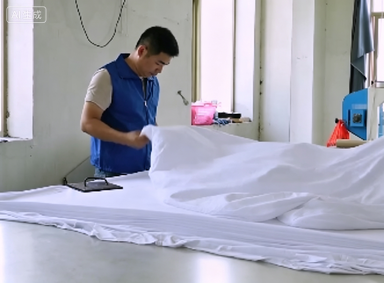
Quality control does not stop after the supplier has produced the fabric. Factories inspect fabric during production and after delivery to identify defects before cutting begins.
A 6 Inspector will check for holes, stains, uneven dyeing, knitting and/or weaving errors, slubs, width variations and surface irregularities. The fabric inspection can be done by the use of a special inspection machine or a set of point-based systems depending on the factory processes. Any defective sections are then identified, removed, repaired, or rejected. Early inspections are particularly critical for large orders because once a problem has been identified after thousands of garments have been cut and sewn, it can lead to considerable waste, rework and production delays.
2.7. Control Dye Lots and Production Batches
Large fabric orders may be manufactured across multiple dyeing or production batches, creating a risk of variation between lots. Factories manage this risk by recording batch and dye-lot information for every shipment and fabric roll. Quality teams compare different lots to approved standards before releasing them for production.
Where possible, factories coordinate bulk dyeing to minimize unnecessary shade differences. Cutting departments may also ensure that fabric from different dye lots is not mixed within the same garment or production bundle. Careful batch management makes it easier to maintain visual consistency and trace problems if an issue appears. It also provides valuable information when repeat orders are placed later.
2.8. Maintain Traceability and Proper Storage
Once fabric arrives at the factory, proper identification and storage become important parts of quality management.
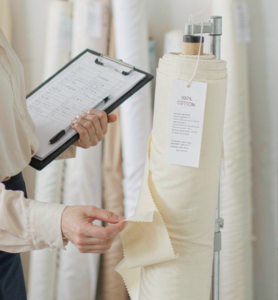
Each roll can be labeled with identification details like the supplier’s name, a purchase order, dye lot, batch number, inspection status, quantity etc. To identify quickly if there are any defects in the cutting or sewing process, this traceability will help the quality teams to identify the source of the problem.
Fabric should also be stored correctly to ensure that it is kept safe from physical damage, contamination, dust and sunlight as well as moisture. A relaxation period, before cutting, may be needed for some fabrics, especially knitted or stretch fabrics. The material characteristics can be maintained through proper storage and preparation which aids cutting and consistent garment production.
2.9. Monitor Suppliers and Correct Quality Issues
Factories always have an eye on the supplier’s performance, and do not view each order as an independent one. They could follow-up on defect rates, test outcomes, delivery performance, shade consistency, responsiveness and the number of corrective actions taken. In the event quality problem occurs the factory collaborates with the supplier to trace the cause of the problem. The solution may be to change the raw materials used or to modify the dyeing process, to enhance production control or to increase the inspection system. This can then be recorded in the factory’s records and tracked for future orders to prevent its re-occurrence. This way of thinking about continuous improvement also lets you make quality risk reductions, production downtime reductions, waste minimisations and further cost savings when ordering more in the future.
- Conclusion
When ordering large quantities of fabrics, the quality of the fabric is at stake, and this is not something that can be achieved by just picking a good fabric supplier. There should be a well-defined sourcing and quality control procedure for factories from a range of factors – from specifications and supplier qualification to sample approval, testing, inspection, batch tracking, storage, and continuous supplier evaluation.
Every step contributes to minimizing fabric variation and production issues, waste, and unexpected costs. Factories can keep materials to the same standards from the first roll to the last production batch by having clear standards and communicating with textile suppliers. In the end, successful sourcing of fabric provides a manufacturer with more control over quality, production efficiency, delivery dates, and customer satisfaction, as well as ensuring a manufacturer can build a successful, long-term business relationship.
- Source Fabric withTelige Now!
Need a trustworthy partner for fabric and garment sourcing and production? Telige can assist you in making your product needs a consistent, production-ready outcome. Working with a manufacturing partner can be easier when it comes to large orders, as they are able to handle everything from fabric selection and coordinating with suppliers to quality control and bulk manufacturing. A good factory can help you to reduce the sourcing pressure and ensure the quality of the product, even if you are creating a new collection or expanding the existing product line. Give Telige a call today to discuss your needs for fabric and garment production and how a professional production process can help you with your next order.