
Cotton is not only one of the most commonly used fabrics in the underwear industry, but it’s also prevalent in loungewear, bedding, towels, and various other sectors, making it ubiquitous in our daily lives.
However, not all cotton is created equal.
In recent years, with the increasing global awareness of sustainable development, more and more brands are emphasizing organic cotton on their product pages, leading many buyers to wonder: What exactly makes organic cotton better than regular cotton?
What’s the difference between 100% pure cotton and 100% organic cotton?
Is it worth the higher cost?
This article will provide an in-depth analysis of the differences between organic and regular cotton, helping you make the most responsible and market-friendly choice for your next collection.
what is organic cotton?
Organic cotton is grown under strict agricultural standards. The seeds must be non-GMO, and the production process complies with the national Organic Textile Standard (GOTS).
Furthermore, no synthetic pesticides or fertilizers are used during cultivation, reducing chemical pollution to the cotton and the environment.
Natural pest control and soil fertility techniques are employed to maintain crop health.
Is 100% cotton as good as organic cotton?
Many people mistakenly believe that 100% cotton equates to natural and healthy products. 100% pure cotton only states that “the ingredient is cotton,” not how the cotton is grown. It may still contain cotton grown with chemical pesticides, genetically modified cotton, and pesticide residues.
“Organic cotton,” on the other hand, guarantees the purity, environmental friendliness, and sustainability of its raw materials.
In terms of softness, durability, and environmental protection:
Softness:
The softness of a fabric depends primarily on fiber length, spinning process, and subsequent processing, not just on whether it’s organic.
Regular cotton fibers are shorter and coarser, making it feel rough to the touch.
To improve softness, regular cotton usually has chemical softeners added, but the softness decreases over time.
Organic cotton, grown without pesticide residue affecting its fiber structure, is inherently soft and smooth, even without chemical softeners. It possesses a natural softness.
If you’re looking for natural softness and a skin-friendly, non-irritating feel, organic cotton is the better choice.
Durability:
Regular cotton undergoes chemical treatment during processing to enhance its durability.
It also undergoes shrinkage treatment to prevent significant shrinkage after a few uses.
Organic cotton, without chemical damage, has more intact fiber strength, is stronger, more stable, and has a longer overall lifespan.
Therefore, high-quality organic cotton is generally more washable and more stable in preventing deformation; however, regular cotton, if made with high-grade cotton and processed properly, can also achieve good durability.
Environmental Protection:
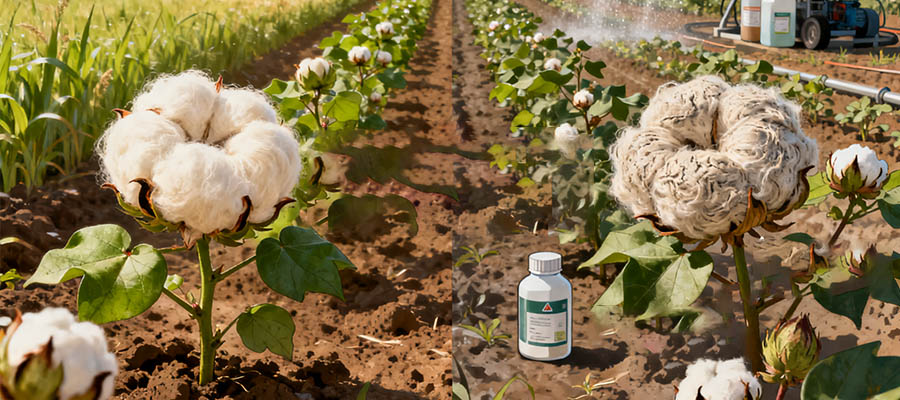
Conventional cotton cultivation requires large amounts of synthetic fertilizers, pesticides, and irrigation water. Over time, this depletes soil nutrients, significantly impacting the land environment. The processing stage also involves the use of numerous chemicals.
One of the most attractive features of organic cotton is its environmental benefits. Organic cotton must meet global organic certification standards. It uses 80%-90% less water during cultivation than conventional cotton and prohibits the use of pesticides and fertilizers, making it more environmentally friendly.
For brands that prioritize environmental awareness, organic cotton is the best choice because it helps reduce pollution, soil degradation, and water waste.
How are conventional cotton and organic cotton grown?
Chemical fertilizers:
To accelerate growth and increase yield, conventional cotton relies heavily on chemical fertilizers to promote rapid plant maturation. However, this practice leads to soil degradation and damage to soil structure.
Organic cotton strictly prohibits the use of chemical fertilizers, allowing only the use of natural organic fertilizers, such as animal manure and compost, to nourish the soil and maintain its health.
Pesticides:
The use of genetically modified seeds in conventional cotton production has led to the emergence of super pests. To combat these pests, large quantities of pesticides, herbicides, and fungicides are used. Pesticide residues also affect the purity of cotton fibers and increase the environmental burden.
Organic cotton, on the other hand, maintains its health using natural and ecological methods. It prohibits the use of any chemical pesticides and controls pests through the introduction of beneficial insects and manual weeding. The resulting ecological environment is healthier, with a higher richness of soil microorganisms.
Genetically modified seeds:
Genetically modified seeds are widely used in conventional cotton.
The use of genetically modified seeds is strictly prohibited in organic cotton.
Why Is Organic Cotton More Expensive Than Regular Cotton?
The cost differences mainly stem from:
- Higher planting costs: Organic cotton requires more manual labor due to the prohibition of chemical fertilizers and pesticides, resulting in a significantly higher labor input compared to the pesticide spraying required for conventional cotton.
- Lower yields: Organic cotton yields are 20-50% lower than conventional cotton, primarily because the lack of chemical fertilizers leads to slower growth and naturally increases the cost per kilogram.
- Certification fees: Organic cotton must pass organic certifications, such as the Global Organic Textile Standard (GOTS). These certification fees are ultimately added to the price of the material.
This premium reflects a higher investment in the environment, farmer health, and product quality.
What are the benefits of organic cotton for the Earth?
Reduced Pollution from Toxic Chemicals
Organic cotton prohibits the use of chemical pesticides, fertilizers, and herbicides, significantly protecting our soil, water resources, and ecosystems, and reducing the harm of agricultural chemicals to nature.
Reduced Water Consumption
Organic cotton uses 80% less water than conventional cotton, relying on natural rainwater harvesting, thus greatly conserving precious water resources.
Maintaining Ecodiversity
Without chemical pesticides disrupting the food chain, cotton fields become a habitat for diverse organisms. Healthy soil teems with life, and various beneficial insects maintain natural balance.
Reduced Carbon Emissions
Healthy organic soil absorbs more carbon dioxide, helping to mitigate global warming. Simultaneously, the absence of synthetic fertilizers significantly reduces carbon emissions during production. Therefore, choosing organic cotton is an effective “low-carbon” option.
Protecting Farmers’ Health
Organic standards ensure farmers’ health, eliminating exposure to toxic pesticides and various chemical fertilizers.
Which Cotton Is Better For Clothing Brands?
For bra brands, there’s no absolute right or wrong choice between regular cotton and organic cotton; it depends on the brand’s overall direction.
If you aim for a more comfortable, environmentally friendly, and brand-value-driven approach, organic cotton is definitely more suitable. It’s grown without pesticides and fertilizers, resulting in more natural, softer fibers that are gentler on sensitive skin. This makes it ideal for bra lines emphasizing comfort, wire-free construction, maternity wear, or sustainability. Furthermore, labels like “organic cotton” and “GOTS certification” can build consumer trust, increasing selling price and brand image.
However, if your brand targets the mass market, or requires large-volume production, fast order fulfillment, and competitive pricing, regular cotton is a more stable choice. It’s cheaper, more readily available, and meets the comfort and breathability requirements of most basic bra styles, making it suitable for best-selling or entry-level products.
In short: For a high-end, environmentally conscious strategy → Choose organic cotton.
For large-volume, cost-effective products → Choose regular cotton.
Our Organic Cotton Products
Are you looking for organic cotton underwear? Here are some of our best-selling products:
Organic Cotton Bras

Organic Cotton Women’s Panties

Organic Cotton Men’s Panties

Organic Cotton Children’s Panties

Come to telige and have your own custom-made organic cotton underwear!
If you’re currently starting your own sustainable bra brand and unsure where to buy truly organic cotton clothing, check out telige. We offer a wide variety of women’s bras, panties, men’s underwear, and other organic cotton apparel. We also provide personalized customization to support your unique brand creation.