
What are Bra Strap Materials?
Bra strap fabrics are special, narrow fabrics designed to offer tension, support, and elasticity. The materials combine artificial fibres such as nylon, polyester, and elastane. They help sustain elasticity and friction. For B2B buyers, the quality of the materials in use will help the end garment retain its form. Such a material gives the end-user a quality-driven product that performs better.
2. What are the most commonly used strap materials for a bra?
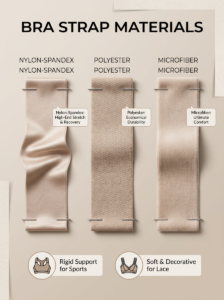
The global lingerie chain draws on a diverse array of textiles, each with distinct advantages. They should be able to stretch the material and recover when the tension reduces. They include nylon-spandex blends and polyester for high-end stretch and economical durability, respectively.
Also, there are innovative microfibers for high comfort. Manufacturers tend to select materials based on the use. For instance, a high-impact sports bra would need a rigid material to support it. On the other hand, a lace bralette would need a soft, decorative, elastic material.
2.1 Cotton Straps
Cotton straps are the best. They have natural breathability and non-allergenic properties. Pure cotton will not snap back, which is a necessity for long-term support. However, you may blend it with elastane to produce a soft, matte finish. These are adjustable elastic bra straps that are suitable for maternity wear or organic lingerie for sensitive skin.
2.2 Polyester-Based Straps
Polyester is the best material in the lingerie industry. It is known for its amazing durability and resistance to shrinkage or stretching. Besides, polyester straps are easy to dye using sumblimation. So they suit brands that use vivid colours or printed logos. Next to nylon, polyester. It is a little stiffer but offers better tension in larger cup sizes, so the straps do not form bed sores under the weight of the breast, making it a cheaper and more reliable option for mass production.
2.3 Microfiber Straps
Luxury designers prefer soft microfiber strap fabric because it is soft and durable. Besides, they are sleek but offer unmatched comfort. Companies make microfiber straps from linen with a pleasing, silky touch.
They have an upper hand over traditional straps. They reduce friction on the shoulders and are the type of straps worn all day. Comfort is the main selling feature of T-shirt bras.
2.4 Elastic Blends
The bra elastic straps are adjustable and blend Nylon and Spandex (Lycra). The blend offers a powerful stretch, which is necessary for a non-restrictive fit. These blends are highly adaptable. Still, manufacturers can adjust the fibre ratio to produce high-tension sports straps or soft, plush-back elastics for tender skin.
2.5 Silicone-Enhanced Straps
Non-slip silicone bra straps have become commonplace in the industry. They address the frequent consumer complaint of slipping. The straps have a silicone coating, with a thin layer of beads on the bottom. The coat gives it a soft hold on the skin, making it essential for strapless bras. For lingerie companies, the ability to offer silicone-backed products is a premium feature that delivers a much better experience for the wearer. Also, it enhances the garments’ stability.
3. Factors to Consider when Choosing Bra Strap Materials
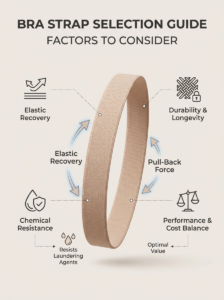
There are many factors to consider when selecting bra strap material. But you must prepare to make a trade-off between performance and cost. The most important points to consider are the recovery of the material and its resistance to the laundering chemicals.
3.1 Durability
Elasticity- should be durable and retain its elastic behaviour after hundreds of stretch cycles. After several months, a material with low quality will stretch excessively, becoming wavy (popularly known as baconing). In the case of B2B sourcing, it is important to check the fatigue resistance of the elastic. The materials used are highly durable so that the bra can retain its lift throughout its life.
3.2 Skin Sensitivity or Pain.
The high-pressure zones, such as shoulders, have straps placed in them, hence the importance of the hand-feel. To prevent redness and chafing, we make use of “plush-back” elastics. The push-backs have a hairy surface that comes into contact with the skin. It reduces pressure on the skin.
3.3 Branding and Aesthetic Appeal.
Companies can easily brand the Adjustable elastic bra straps. For instance, Jacquard weaving allows a brand logo to be woven directly onto the strap.
Also, manufacturers enhance the appeal by ensuring lustre and matte finishes are compatible with the bra’s fabric. In addition, they ensure the strap in high-shine matches the bra, and a matte finish pairs with athletic or casual cotton.
3.4 International Textile Standard Conformance.
For international companies, there are standards such as OEKO-TEX(r) Standard 100 that materials must meet. It will ensure that the straps are free of toxic substances, such as lead and formaldehyde, and of allergenic dyes. Legal compliance is not only a prerequisite in most markets but also a formidable marketing tool that guarantees B2B customers and end consumers that the product is environmentally friendly and safe.
4. Innovations in Bra Strap Material
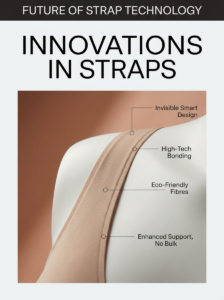
The lingerie business is moving toward invisible, smart design. The innovations intend to reduce bulk and enhance support. With high-tech bonding to ecologically friendly fibres, the strap technology enables brands to produce a smoother, more practical silhouette that will satisfy the requirements of the modern active consumer.
4.1 Brand Customisation Trends.
The present market is all about customisation. The brands are no longer staying within standard widths. Instead, they are choosing tailor-made jacquard designs and custom-dyed fabrics to suit particular seasonal colours. It enables smaller boutique brands to distinguish themselves from the competition in the mass market by providing unique, branded hardware and strap textures that become signature design attributes.
4.2 Laser Cut and Seamless Straps.
One of the latest trends is the so-called no-show appearance. Laser-cut, bonded straps mean there is no traditional stitching, resulting in an exceptionally slim profile that disappears under tight clothes. These smooth lines may incorporate heat-activated glues that help to fix components.
4.3 Sustainable Materials
As consumers become more transparent and environmentally conscious, lingerie companies must abandon traditional synthetics in favour of microfiber straps. Some innovations in sustainable bra strap materials focus on circularity without sacrificing the high-tension recovery needed to support.
Conventional elastics came from virgin petroleum-based spandex. But today, manufacturers are obtaining recycled elastane (like ROICA™ EF) and bio-based spandex made of industrial corn. Those give the same snap-back feel but have a much smaller carbon footprint.
4.4 Smart Textiles
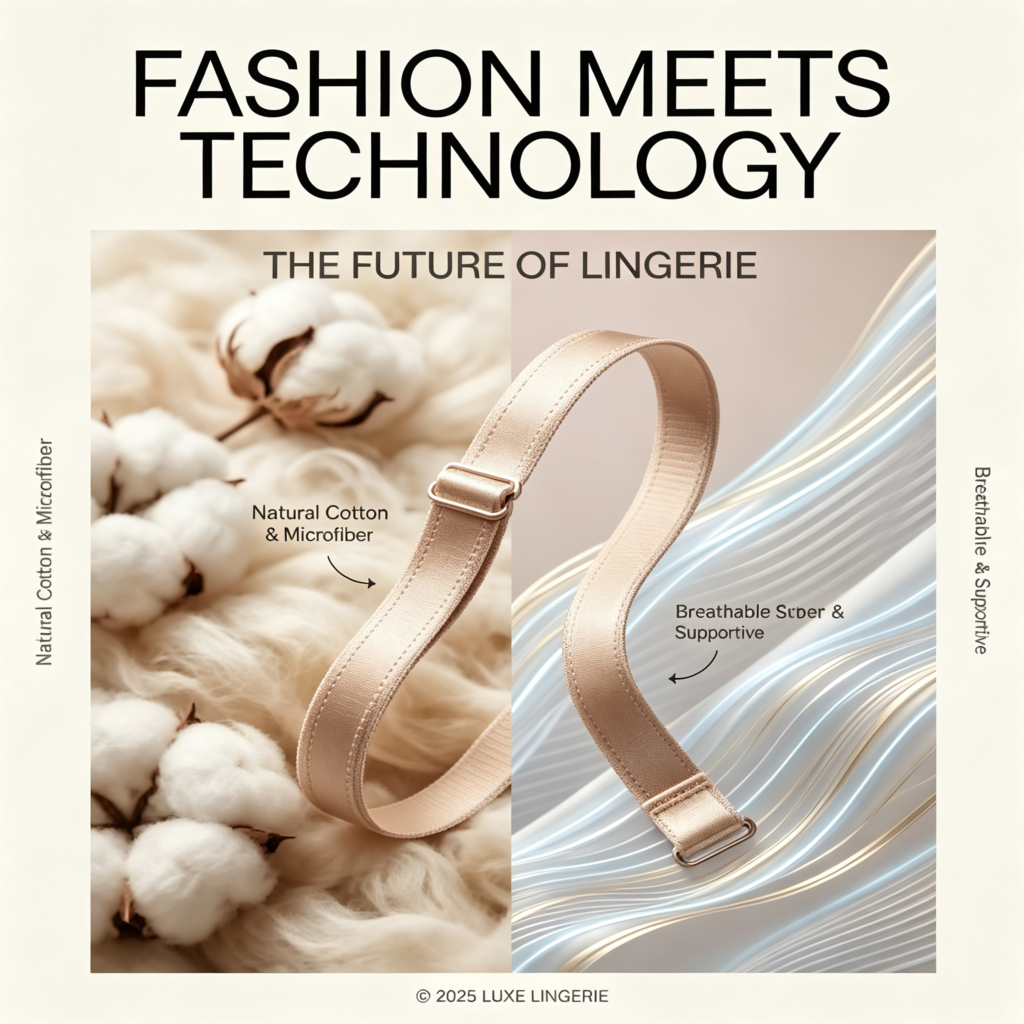
Smart straps will be a part of the future of lingerie. Scientists are working on fabrics that can respond to body temperature and pressure. Although these materials are still in the early phase of commercialisation, the available design allows them to tighten under high-impact movement and loosen when resting. This is the crossroads of fashion and technology, the future of performance-based lingerie brands.
5 Conclusion
The selection of appropriate bra strap materials is a major factor in the overall quality, comfort, and marketability of lingerie. Among natural materials, cotton and microfiber are suitable. They are soft and suitable for making comfortable straps for all-day wear.
6. Buy Bra Straps at Telige
Let Telige handle your lingerie sourcing. Our products are high-quality, customizable bra strap materials, including tough elastics and luxurious microfibers. Telige offers the high-quality elements your brand should have. We produce outstanding lingerie that emphasises international standards and innovative textures. Call us now to shop through our catalogue.